
The short answer
If your AC is breaking down often, can't keep up on hot days, or uses an outdated refrigerant, replacement is usually worth considering. We start with an inspection of your current system, ductwork, and electrical setup, then give you clear repair and replacement options so you can decide.
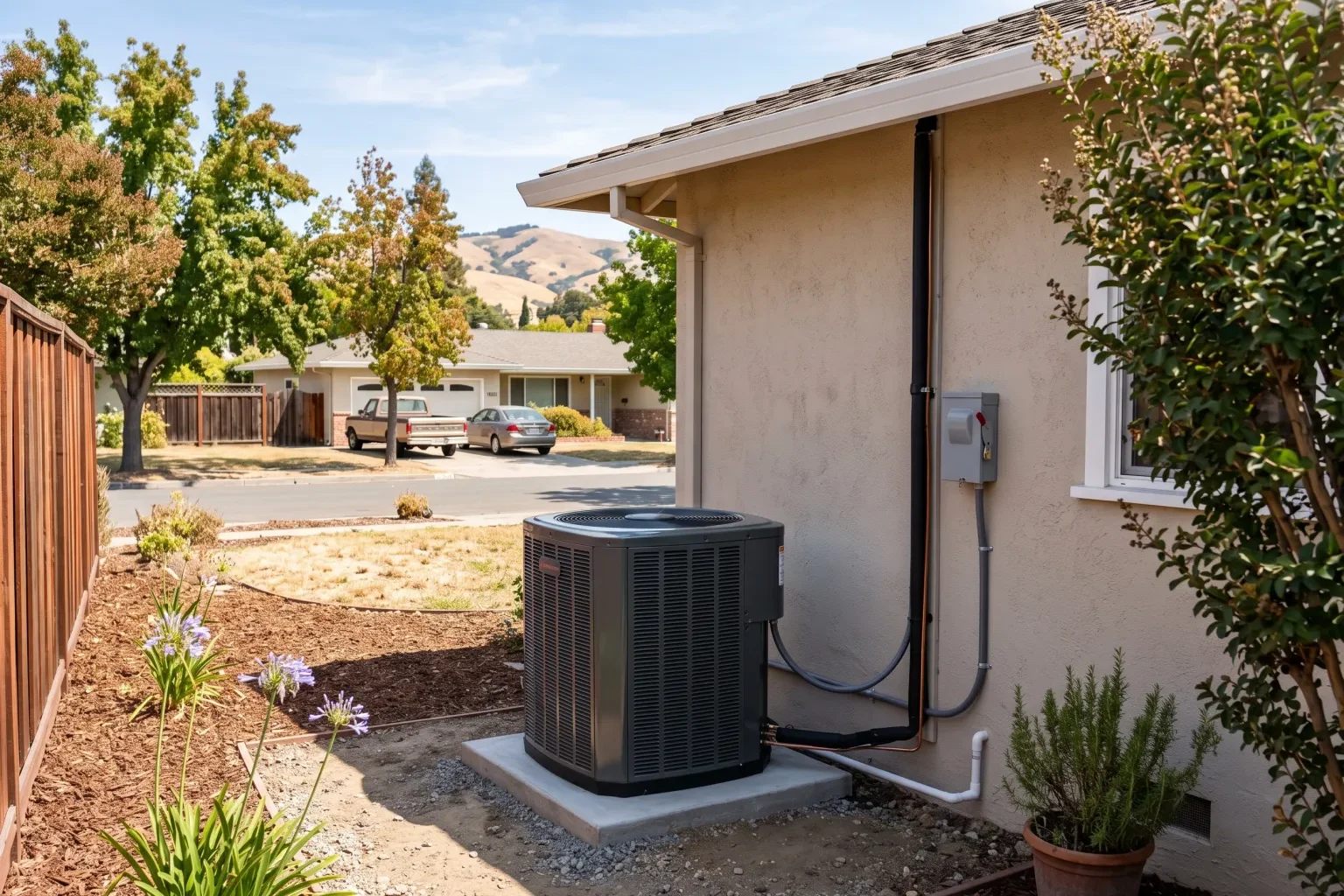
A new air conditioner is a big decision, and it's easier when you know what's driving it. In the Santa Clara Valley, summers are dry and warm, and inland and southern parts of the valley run noticeably hotter than neighborhoods closer to the Bay. That means a system sized for one part of town may struggle in another. QuickAir HVAC Repair Service installs central air conditioners and heat pumps for homeowners in San Jose and nearby cities. This page covers the signs that it's time for a new system, what we check before recommending anything, when a repair still makes sense, what affects the cost, and what to expect from a visit.
Signs You May Need a New Air Conditioner
Most air conditioners give warning signs before they quit. One sign alone doesn't mean you need a new system, but several together usually point that way. If you don't have central air yet, the questions are simpler: what equipment fits your home, and can your ducts and electrical panel support it.
Watch for these common signs:
- The system needs repairs more than once a season, or the same part keeps failing.
- Some rooms stay warm while others are fine, even after filters and vents are checked.
- The unit runs constantly on hot afternoons and never quite reaches the thermostat setting.
- Your electric bills climb during summer without a change in how you use the system.
- The system uses R-22 refrigerant, which is no longer produced, so recharging it gets harder over time.
- You hear grinding, banging, or loud buzzing from the outdoor unit, or notice ice on the refrigerant lines.
- The equipment is old enough that replacement parts are hard to find.
What We Check Before Recommending a System
A good installation starts with an accurate picture of your home. We don't size a system by matching the old unit or guessing from square footage. Too large a system cycles on and off and leaves the air clammy. Too small a system runs nonstop and wears out sooner.
During the assessment we look at the factors that determine what will actually work in your house:
- Your home's size, layout, ceiling heights, insulation, windows, and how much afternoon sun it gets.
- The condition, sizing, and sealing of your ductwork, since leaky or undersized ducts limit any new system.
- Your electrical panel and circuit capacity for the outdoor unit.
- Where the outdoor unit can go, with attention to clearance, noise, and access for future service.
- Your current furnace or air handler, and whether it can pair with a new outdoor unit.
- Your thermostat and whether it's compatible with the new equipment.
Repair or Replace: Your Options
Not every struggling AC needs replacing. If the system is reasonably new, the problem is a single failed part like a capacitor or fan motor, and the rest of the equipment is in good shape, a repair is often the sensible choice. We'll tell you when that's the case.
Replacement makes more sense when repairs keep stacking up, the system uses phased-out refrigerant, or a major part like the compressor fails on older equipment. When you replace, you generally have a few paths: a new central air conditioner paired with your existing furnace, a full system replacement, or a heat pump that handles both cooling and heating.
Heat pumps are worth a look in the Bay Area. Under Bay Area Air District rules, natural gas furnaces manufactured from 2029 must meet a zero-NOx emission standard, which in practice points homeowners toward heat pumps when a furnace is replaced after that date. These rules don't require you to replace working equipment, so there's no need to rush. But if your furnace is also aging, it can make sense to plan both at once. We'll lay out each option side by side so you can compare.
What Affects the Cost of AC Installation
We can't give a fair price without seeing your home, because several factors change the scope of the job. Knowing them helps you understand any quote you receive, from us or anyone else.
Incentives can also affect your final cost. The federal Energy Efficient Home Improvement Credit (25C) only covered qualifying heat pumps placed in service before December 31, 2025, so it isn't available for new installations. Bay Area homeowners can check BayREN and their local clean energy provider for current heat pump and electrification incentives. Amounts and availability change by funding cycle, so we confirm the current offer before including it in a quote.
- System type: central AC only, a full system, a heat pump, or a ductless setup.
- Equipment size and efficiency level.
- Ductwork condition, and whether ducts need sealing, repairs, or replacement.
- Electrical work, such as a new circuit or panel upgrade.
- Installation location and access, including attics, crawlspaces, and outdoor unit placement.
- Permits and inspections required by your city.
- Add-ons like a new thermostat or improved air filtration.
How an Installation Visit Works
First, we schedule an in-home assessment at a time that works for you. A technician inspects your current system, ducts, and electrical setup and asks how your home feels in summer, including which rooms run hot.
Next, we explain what we found and give you written options, including a repair option if one makes sense. You'll know what each choice includes before you commit.
On installation day, the crew protects your floors and work areas, removes the old equipment, and installs the new system. We handle the permit process with your city. Before we leave, we test the system, check refrigerant levels and airflow, walk you through the thermostat, and explain basic upkeep like filter changes. If your AC fails during a heat wave, we also offer 24/7 emergency service.
AC Installation by city
- AC Installation in Campbell
- AC Installation in Los Gatos
- AC Installation in Monte Sereno
- AC Installation in Santa Clara
- AC Installation in Saratoga
- AC Installation in Cupertino
- AC Installation in Sunnyvale
- AC Installation in Milpitas
- AC Installation in Los Altos
- AC Installation in Mountain View
- AC Installation in Los Altos Hills
- AC Installation in Fremont